Source Multicolor Organza Self Sealing Bag for Gifts, Jewelry, and Crafts
Find 30 listings for the multicolor organza self sealing bag suitable for gifts, jewelry, and arts and crafts. Buyers can compare customization options, printing processes, and shipping methods from verified suppliers in China.
Key considerations
Products List




Comprehensive Sourcing Guide
Strategic Sourcing Guide for Multicolor Organza Self-Sealing Bags
Understanding Product Specifications and Material Variability
When sourcing multicolor organza self-sealing bags, buyers must first navigate a landscape of diverse technical specifications that often vary significantly between individual suppliers. The core material for these products is organza, a sheer, lightweight fabric known for its crisp texture and transparency. However, the specific attributes of the organza can differ based on the manufacturing process and intended application. In the current market, buyers may encounter products described with varying hardness levels, ranging from soft to medium soft, which directly impacts the tactile experience and the bag's ability to hold shape.
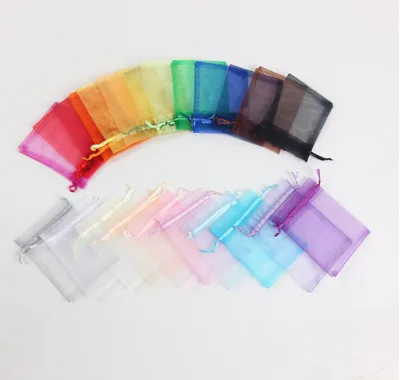
The visual presentation is another critical specification. While the core keyword implies "multicolor," actual product listings often reveal a spectrum of options. Some suppliers offer bags in specific solid colors such as black, while others provide a wide array of color choices where any color is available upon request. The pattern complexity also varies; some inventory is characterized by a "without pattern" design, offering a clean, minimalist look, whereas other listings explicitly feature patterns or specific printing techniques like silver stamping logos. The shape of the bag is equally variable, with square, rectangle, and other geometric forms appearing in different product models.
The closure mechanism is a defining feature for self-sealing bags. While the general category includes drawstring types, specific models may utilize punching techniques or other sealing methods. The printing process applied to these bags also differs; some utilize laminating processes, while others rely on offset printing to achieve the desired multicolor effect. Buyers should verify the specific model number, such as FH0311 or organza1103, as these identifiers often correspond to distinct sets of specifications regarding size, shape, and material thickness. Understanding these granular details is essential before initiating any procurement process, as a mismatch in specifications can lead to product rejection or unsatisfactory end-user experiences.
Compliance, Certification, and Quality Standards
Navigating the compliance landscape for organza bags requires careful verification of standards and certifications, as these documents are not universally applied to every product listing. In the supply chain, certain products are associated with specific standards, such as the CE mark, which indicates conformity with health, safety, and environmental protection standards for products sold within the European Economic Area. However, other product models may list their standard as "Customized," implying that the compliance requirements are tailored to the specific needs of the buyer rather than adhering to a fixed industry standard.
Buyers must distinguish between the presence of a certification and the actual verification of that certification for a specific batch. For instance, while a supplier might list CE as a standard for one product line, another line might not carry this designation. The origin of the product plays a significant role in compliance expectations. Products originating from regions like Zhejiang, China, or generally from China, are subject to specific export regulations and quality control protocols. The "High" export volume mentioned in some contexts suggests that these suppliers are experienced in navigating international trade compliance, but this does not automatically guarantee that every unit meets the specific regulatory requirements of the buyer's destination market.
Furthermore, the material safety and suitability for specific uses must be verified. Although organza is generally safe for general packaging, its use in applications involving food, cosmetics, or health care products necessitates rigorous checks. Buyers should not assume that a bag listed for "Health Care Products" or "Food" is automatically certified for direct contact with consumables unless explicit documentation is provided. The "Customized" standard option allows for flexibility but places the burden of verification on the buyer to ensure that the customized standard meets their local regulatory requirements. It is crucial to request test reports or certificates of analysis that specifically cover the material composition and any chemical treatments applied during the printing or laminating processes.
Cost Drivers and Pricing Structures
The pricing of multicolor organza self-sealing bags is influenced by a complex interplay of factors, including material costs, customization levels, order volume, and logistics. The observed price range in the market spans from very low figures to moderate levels, but these figures are rarely indicative of a flat rate per unit. Instead, the final cost is heavily dependent on the Minimum Order Quantity (MOQ). While some suppliers may advertise low entry points with MOQs as low as 2 pieces, others operate with significantly higher thresholds, such as 1000 pieces or even up to 20,000 pieces. This disparity means that the unit price for a small order will be substantially higher than for a bulk purchase, making volume a primary cost driver.
Customization is another significant factor affecting cost. The availability of customization options, such as specific logos, patterns, or unique shapes, often incurs additional charges. For example, products featuring "Silver Stamping Logo" or specific printing processes like offset printing or laminating may carry a premium over standard, unprinted variants. The complexity of the design and the number of colors involved in the multicolor aspect can further escalate costs. Additionally, the "High Quality with Factory Prices" advantage mentioned in some listings suggests that direct sourcing from the manufacturer can reduce costs, but this benefit is often realized only at higher volume tiers.
Logistics and shipping methods also contribute to the total landed cost. The choice between ocean shipping, air transportation, or express delivery services like DHL, UPS, FedEx, and EMS will drastically alter the final price. Ocean shipping is generally the most cost-effective for large volumes but involves longer lead times, while air and express delivery offer speed at a premium. The packaging requirements, which can be customized "According to Your Request," may also add to the cost if specialized packing materials or labor are required. Buyers must analyze the total cost of ownership, including the unit price, setup fees for customization, and shipping expenses, rather than focusing solely on the base price per bag.
Typical Applications and Market Segmentation
Multicolor organza self-sealing bags serve a wide array of applications across various industries, driven by their aesthetic appeal and functional versatility. The primary use cases identified in the market include packaging for jewelry, cosmetics, gifts, and arts and crafts. The sheer, transparent nature of organza allows the contents to be partially visible, which is highly desirable for retail packaging where product presentation is key. For jewelry and cosmetic products, the bag acts as a protective yet elegant outer layer, enhancing the perceived value of the item inside.
Beyond retail packaging, these bags are extensively used in promotional activities. The "Suit for: Promotion" attribute highlights their role in marketing campaigns, where branded bags with custom logos serve as giveaways or part of a promotional kit. The ability to print logos and apply various patterns makes them ideal for corporate events, trade shows, and seasonal campaigns. Additionally, the bags are utilized for packaging toys, greeting cards, and digital products, demonstrating their adaptability to different product sizes and shapes.
The market segmentation for these bags is diverse, catering to both small-scale artisans and large-scale manufacturers. The "High" export volume to regions like North America and Western Europe indicates a strong demand in developed markets where packaging aesthetics and sustainability are prioritized. The "Rich" experience of suppliers suggests that the market is mature, with established channels for distributing these products globally. Buyers should consider the specific requirements of their target market; for instance, packaging for the food industry may require different material certifications compared to packaging for toys or digital accessories. Understanding the end-use context is vital for selecting the right product specifications and ensuring the bag meets the functional and aesthetic expectations of the final consumer.
Supplier Evaluation and Selection Criteria
Selecting the right supplier for multicolor organza self-sealing bags requires a thorough evaluation of their capabilities, experience, and reliability. One of the key indicators of a supplier's maturity is their experience level, with many suppliers boasting "Rich" experience in the industry. This experience often translates to better quality control, more efficient production processes, and a deeper understanding of market trends. Buyers should also assess the supplier's export history, particularly their presence in key markets like North America and Western Europe, as this indicates their ability to navigate international trade regulations and logistics.
The range of supported products is another important criterion. Suppliers that offer a comprehensive suite of related products, such as woven labels, printed labels, and hang tags, can provide a one-stop solution for packaging needs. This integration can streamline the procurement process and ensure consistency in branding across different packaging elements. Additionally, the flexibility of the supplier in terms of customization is crucial. The ability to offer "Any Colour Is Available" and customize the shape, size, and printing process demonstrates a supplier's adaptability to specific buyer requirements.
Logistics capabilities are equally important. A supplier that offers multiple shipping options, including ocean, air, and express delivery, provides buyers with the flexibility to choose the most cost-effective and timely method for their needs. The transparency of the supplier regarding lead times and sample availability is also a key factor. While some suppliers offer sample times of 3-5 days, others may require 5-7 days or negotiation. Buyers should verify these timelines to ensure they align with their project schedules. Finally, the supplier's commitment to quality, often reflected in their adherence to standards like CE or their willingness to customize standards, should be a primary consideration in the selection process.
Quality Control and Long-Term Procurement Strategy
Implementing a robust quality control (QC) strategy is essential for maintaining the integrity of multicolor organza self-sealing bags throughout the procurement lifecycle. Given the variability in product attributes such as hardness, pattern, and printing quality, buyers must establish clear acceptance criteria before production begins. This includes verifying the material composition, ensuring the color accuracy matches the requested multicolor specifications, and checking the durability of the self-sealing mechanism. Regular inspections during the production process can help identify and rectify issues early, preventing costly delays or rejections upon delivery.
For long-term procurement, building a strategic partnership with a reliable supplier is more beneficial than transactional buying. Suppliers with "Rich" experience and a history of high export volumes are better positioned to support long-term contracts and scale production as demand grows. Buyers should focus on suppliers who offer flexible MOQs and can accommodate changes in order volume without compromising quality. The ability to negotiate sample times and delivery schedules is also a sign of a supplier's willingness to collaborate and adapt to the buyer's evolving needs.
Sustainability and ethical sourcing are increasingly becoming important considerations in long-term procurement. While specific environmental certifications may not be explicitly listed for all products, buyers should inquire about the supplier's practices regarding material sourcing and waste management. Ensuring that the organza material is sourced responsibly and that the printing processes do not involve harmful chemicals can enhance the brand's reputation and align with corporate social responsibility goals. By prioritizing quality, flexibility, and ethical standards, buyers can secure a stable supply chain that supports their business growth and maintains high product standards over time.
FAQs
What customization options are available for these bags?
Customization is available for these bags, allowing buyers to request specific colors, shapes, and logo printing. The product line supports any color choice and can include silver stamping logos or offset printing processes. Buyers can also specify unique packaging requirements according to their request.
How long does it take to receive samples?
Sample delivery typically takes 3 to 5 days or 5 to 7 days depending on the specific product model. Some listings indicate that sample times can be negotiated directly with the supplier. Production time for bulk orders generally ranges from 10 to 15 days after sample approval.
Which certifications do these organza bags meet?
Some product models meet the CE standard, indicating conformity with European safety and environmental requirements. Other models list their standard as customized to fit specific buyer needs. Buyers should verify if the specific batch holds the required certification for their target market before purchasing.
Can I order small quantities with low minimums?
Minimum order quantities vary significantly, ranging from as low as 2 pieces to as high as 20,000 pieces depending on the supplier. Some models have a standard MOQ of 1000 pieces, while others offer flexible entry points. Buyers must check the specific model requirements to determine the feasible order size.
What materials are used to make these bags?
The primary material used is organza, a sheer and lightweight fabric available in soft or medium soft hardness levels. Some variants are made from art paper and feature specific shapes like square or rectangle. The material choice impacts the bag's transparency and ability to hold shape for jewelry or gift packaging.
How are these bags shipped to international destinations?
Shipping options include ocean shipping, air transportation, and express delivery services like DHL, UPS, or FedEx. The logistics method depends on the order volume and urgency, with ocean shipping being common for large bulk orders. Lead times vary based on the selected shipping method and destination.
What are the primary uses for these multicolor bags?
These bags are suitable for packaging jewelry, cosmetics, gifts, toys, and arts and crafts. They are also used for health care products, food items, and promotional campaigns. The transparent nature of the material makes them ideal for retail presentation where product visibility is required.